IT Downtime & Business Impact


Does IT Downtime Affect Business Operations?
Yes. IT downtime directly impacts business operations by disrupting workflows, reducing productivity, delaying communication, and creating financial loss across multiple departments.
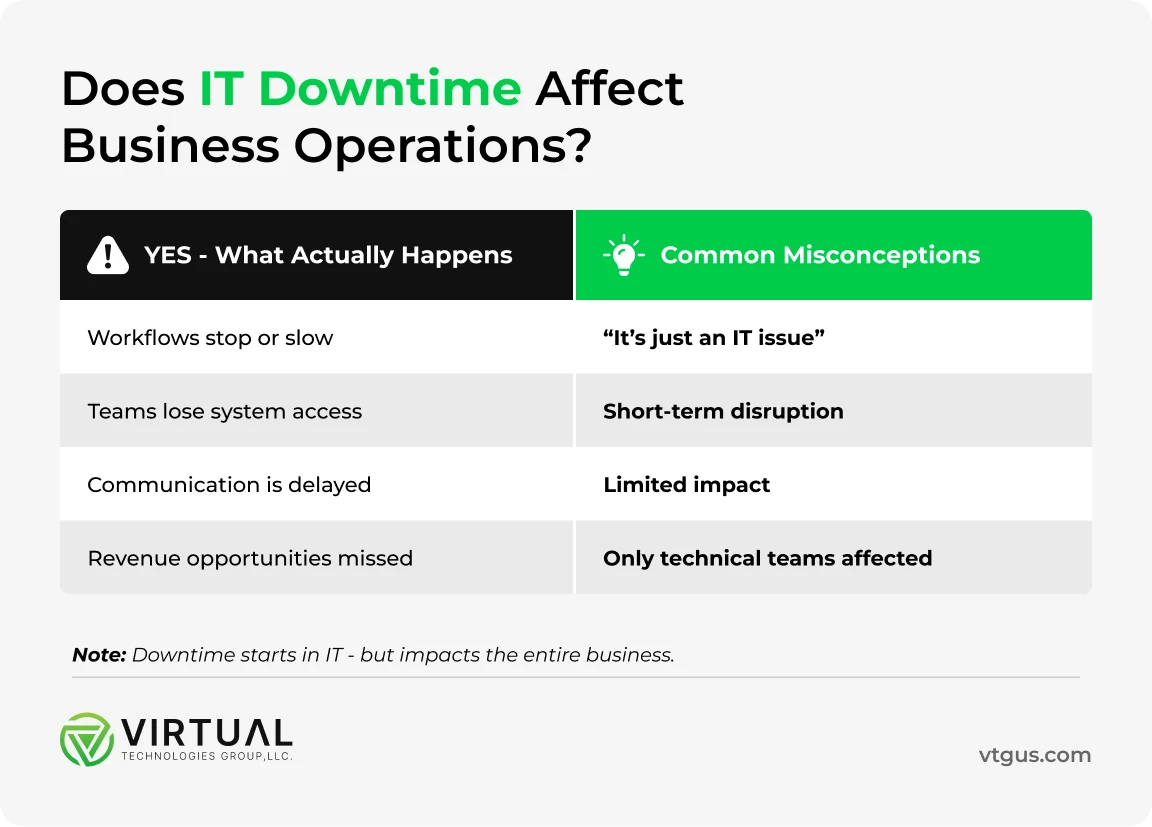
Why IT Downtime Is an Operational Issue, Not Just IT
Many organizations still treat downtime as a technical inconvenience.
In reality, modern businesses rely on interconnected systems for nearly every function:
- Sales
- Operations
- Customer service
- Communication
- Finance
When systems go down, the entire organization feels the impact, not just IT.
What Happens During IT Downtime?
Downtime affects multiple areas at once. Common impacts include:
- Employees unable to access systems
- Delayed customer communication
- Stalled workflows
- Lost visibility into operations
Even short outages can create lasting disruptions.
How Downtime Affects Productivity
When systems are unavailable:
- Work slows or stops entirely
- Employees shift to manual workarounds
- Tasks take longer to complete
As businesses grow, these effects multiply across teams.
The Financial Cost of Downtime
Downtime can result in:
- Lost revenue opportunities
- Delayed transactions
- Reduced efficiency
- Increased recovery costs
The larger the organization, the higher the cost per hour of downtime.
Why Downtime Happens
Common causes include:
- Outdated infrastructure
- Lack of monitoring
- Reactive IT support
- System overload
- Security issues
These problems often develop gradually before becoming visible.
How Modern IT Prevents Downtime
Enterprise IT environments focus on prevention, not reaction. This includes:
- Continuous monitoring
- Proactive maintenance
- Automated alerts
- Redundancy planning
- Structured response processes
The goal is to identify issues before they impact operations.
FAQ SECTION
How does IT downtime affect businesses?
IT downtime disrupts operations, reduces productivity, delays communication, and can result in financial loss.
What causes IT downtime?
Downtime is commonly caused by outdated systems, lack of monitoring, hardware failure, and security issues.
How much does downtime cost a business?
Costs vary, but downtime can result in lost revenue, reduced productivity, and increased recovery expenses.
Can downtime affect customer experience?
Yes. Downtime can delay responses, interrupt services, and negatively impact customer trust.
How can businesses reduce downtime?
Businesses can reduce downtime by implementing proactive monitoring, maintaining systems regularly, and using structured IT management.
Why is downtime worse for growing companies?
As companies scale, more systems and teams depend on technology, increasing the impact of disruptions.
What is proactive IT management?
Proactive IT management involves monitoring systems continuously and resolving issues before they cause downtime.
Is downtime preventable?
While not all downtime can be eliminated, most disruptions can be reduced significantly with proper infrastructure and monitoring.
Conclusion
IT downtime is no longer just a technical issue, it is a business problem that affects operations, revenue, and customer experience.
Organizations that treat IT as operational infrastructure are better positioned to prevent disruptions and maintain consistent performance.
Subscribe to our newsletter
Bring your skills, your passion, and your goals - we’ll provide the platform to thrive.

Stay Ahead with VTG Insights